

STORY 3

powering accountability

PAI knows that without a strong, connected and well-resourced civil society holding decision-makers accountable to the sexual and reproductive health needs of their citizens, government promises can end up being little more than words on paper.

That’s why we invest in tools and approaches that enable advocates to demand measurable, sustainable action from their governments. In partnership with 14 organizations across 11 countries, PAI supports a network of nearly 300 regional and local organizations to collaboratively track national commitments to reproductive health. The goal is to inform better policies and funding that actually meet the needs of women, youth and at-risk communities.

Share This Story

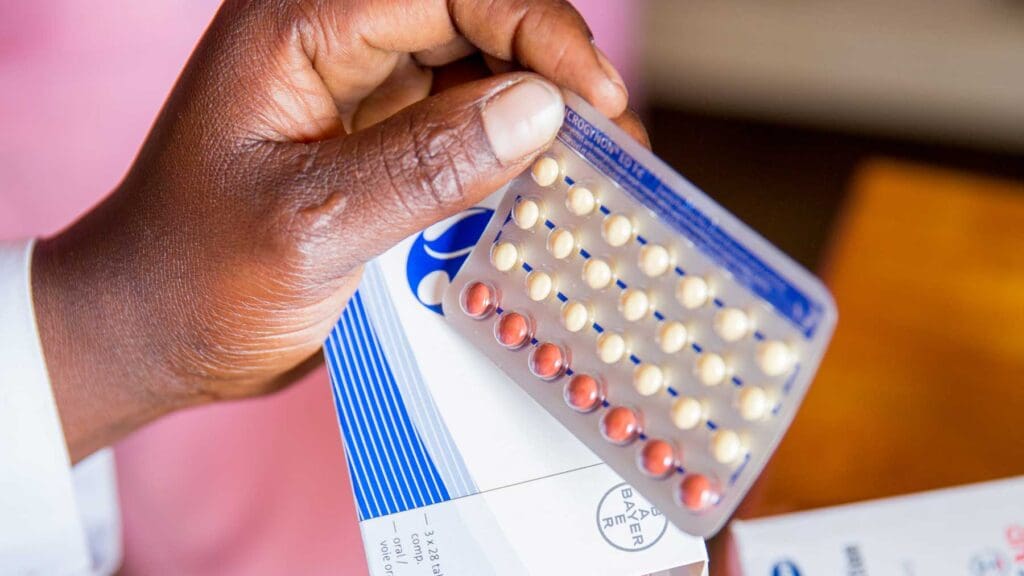
Global initiatives like FP2030 aim to expand access to family planning for the 218 million women who want to avoid pregnancy but are not using a modern method of contraception. (Photo by Sala Lewis for PAI)

Tracking Progress on Family Planning Commitments

Tracking Progress on Family Planning Commitments

One of the approaches PAI has supported is the Motion Tracker, developed by Ugandan civil society organization Samasha. The Motion Tracker is a comprehensive framework that promotes collaboration among advocates, governments, media and other stakeholders to collectively advance progress on governments’ family planning commitments.

PAI partnered with Samasha to launch the Motion Tracker across Ethiopia, Indonesia, Kenya and Nigeria in 2019, with the goal of establishing in-country coalitions that could collaboratively drive progress on Family Planning 2020 (FP2020) commitments and strengthen government accountability for meeting their countries’ family planning needs.

Indonesian civil society organization Yayasan Cipta Cara Padu’s (Cipta) continued engagement with the Motion Tracker over the course of four years enabled transformative policy change in 2022: Cipta played a pivotal role in shaping and launching the country’s commitments for Family Planning 2030 (FP2030) — a global family planning partnership — by building strong civil society networks and developing effective relationships with government agencies.

The Indonesian government has also recognized the Motion Tracker as an official accountability mechanism for its FP2030 commitments, paving the way for civil society to be at the center of tracking progress and contributing to the achievement of the country’s family planning goals.

Through PAI’s Government Accountability for Family Planning Budgets initiative, 10 civil society partners led networks of nearly 70 family planning advocates across seven countries to collaborate on tracking government spending for family planning services and contraceptives.

What gets measured gets managed in Benin

What gets measured gets managed in Benin

Getting governments to commit to funding family planning is a big step, but advocates literally need to follow the money to ensure that these pledges translate into people actually getting the services and information they need.

That’s why PAI has been providing civil society partners across sub-Saharan Africa with tailored technical support and strategic guidance to hold governments accountable for increasing domestic investments in family planning and improving the transparency of family planning budget data.

In Benin, PAI connected two civil society organizations with complementary skill sets to collaboratively track family planning expenditures. Groupe de Recherche, d’Action et de Formation en Épidémiologie et en Développement’s (GRAFED) expertise in family planning and reproductive health paired well with Social Watch Benin’s technical know-how on budget and accountability processes.

In 2022, PAI’s technical assistance enabled these two champions to drive advocacy that resulted in a 20% increase in the budget for family planning commodities — doubling the 10% per year pledged under Benin’s FP2030 commitments and allocating approximately $555,000 to meet the country’s contraception needs.

thank you

In 2022, the right to bodily autonomy and reproductive health was attacked like never before. But despite these threats, PAI, our network of partners and this global movement remain strong.

You are an important part of this movement, and we are grateful for your support in 2022. We still face challenges. But — with you by our side — our movement is unstoppable.

Members of a women’s group in India enjoy a lighthearted moment after a training session on sexual and reproductive health and rights. (Photo by Sala Lewis for PAI)

GET UPDATES

Stay informed about the issues impacting sexual and reproductive health and rights.

DONATE

Be a champion for women and girls around the world.

ENGAGE

Join the movement to advance the rights of women and girls.

powering activism

On May 2, 2022, news of the leaked Dobbs decision overturning Roe v. Wade sent shockwaves that reverberated across the United States and around the world. PAI responded within hours, joining thousands of protestors on the steps of the U.S. Supreme Court. We spoke out on social media, provided context on the global impacts of the ruling for the media and stood in solidarity with our fellow champions fighting for reproductive rights domestically.

Speaking truth to Power Power In Washington D.C.

By the time the Dobbs decision became official on June 24, PAI already had spent weeks refining our strategy and messaging to continue advancing our agenda in a post-Roe political climate.

Key to our ability to take quick action was our long-standing leadership of the International Family Planning Coalition (IFPC) — an alliance of more than 70 members representing rights-focused groups and international humanitarian, development and faith-based organizations.

The collective advocacy of PAI and our coalition partners led to significant gains on Capitol Hill in 2022. Together, we secured record support — over 200 co-sponsors — for the Global Health, Empowerment and Rights (Global HER) Act, which would permanently repeal the Global Gag Rule. We also worked with our champions in the Senate to introduce the Abortion is Health Care Everywhere Act, which would eliminate the Helms amendment.

We succeeded at avoiding funding cuts for international family planning and reproductive health programs and the United Nations Population Fund (UNFPA) — no small feat, given the emboldened opposition in Congress.

While our focus is on the international sphere, we were not simply bystanders to what was happening in the United States. We stood with our fellow advocates working in the domestic space, including supporting the Title X domestic family planning program and endorsing the Women’s Health Protection Act to re-establish a federal right to abortion care.

We do all this as part of a vocal, unified sexual and reproductive health and rights movement — a movement that we will continue to strengthen, both at home and abroad.

In addition to hundreds of engagements with congressional staff, PAI’s advocacy in Washington, D.C., included:

letters signed to U.S. policymakers
0
pieces of legislation endorsed
0
policy briefs and analyses published
0